Design and Build
Advanced wing foil design: custom boards that lift your riding
In wing foiling there are off-the-shelf boards, and there are boards designed specifically for you. The first follow industrial patterns; the second follow your body, your biomechanics and your technical preferences. At Uroboards, that difference isn’t just measured in millimetres: it comes from a design philosophy built around the rider.
3D design: precision from the very start
It all starts on screen. With 3D modelling (3D CAD), we turn your individual variables, such as weight, level, riding style and favourite moves, into optimised shapes. And it’s not only about getting the most out of the board.
At Uroboards, no parameter is generic. Every element, including the volume under your back foot, the type of foil you use and so on, is set to the rider’s specs.
CNC machining: accurate to the millimetre
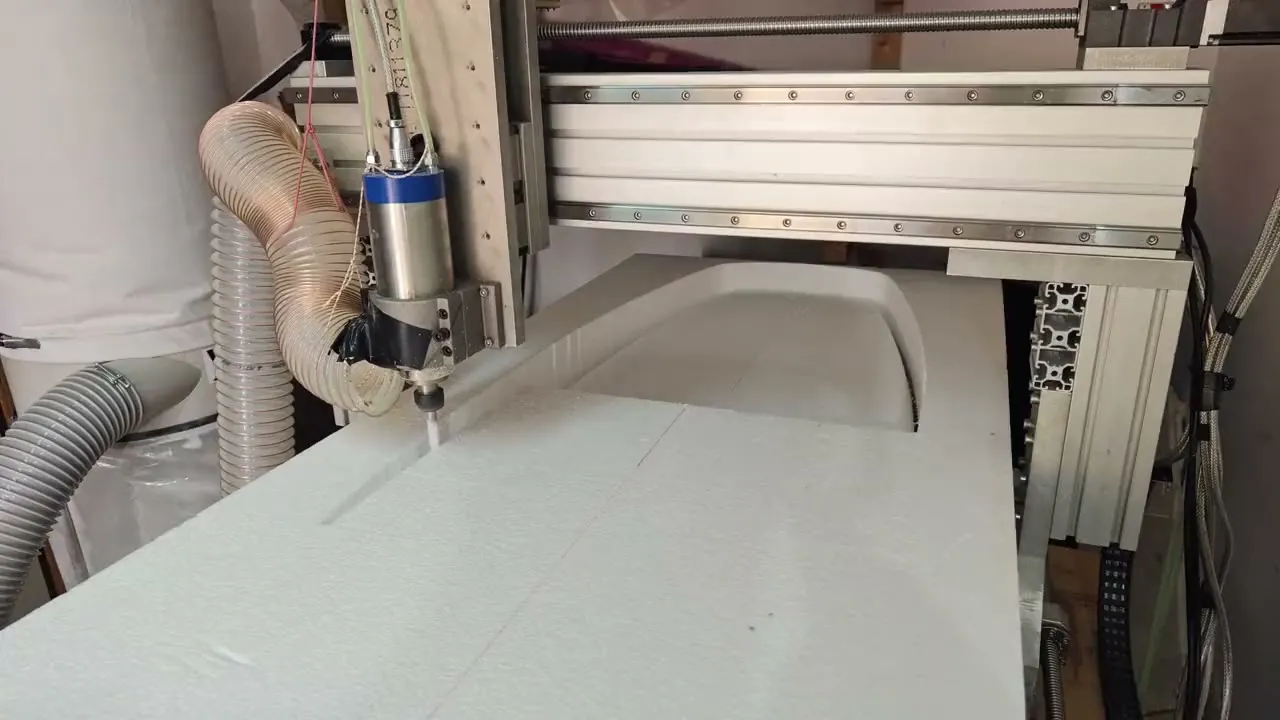
Once the digital design is signed off, the next step is to carve it into the real world with a precision no generic mould could match. For that we use a 3-axis CNC machine that doesn’t just work to tight tolerances: we designed and built it ourselves, piece by piece. Made to our own requirements, it lets us machine every shape straight from the 3D model, so the finished board matches the design exactly. We don’t outsource this critical step: we control it from the first byte to the last gram of foam.
Vacuum lamination: structural optimisation under controlled pressure
Once the shape is ready, it moves into skilled hands. Vacuum lamination uses pressure to compact the reinforcing fibres, removing flaws, trapped air and excess resin. The result is an even, light, strong structure, ideal for the demands of freestyle, wave riding and the shifting dynamic loads of advanced riding.
Detail by detail: how a Uroboards board is built
Then human hands take over again. Vacuum laminating compacts the fibres, like gritting your teeth before a jump. The result: a light, reactive board that’s tough enough to handle freestyle, wave riding and your mood swings.
01. EPS core
A light base, with backbone. We use high-density EPS (15–20 kg/m³), the ideal balance between structural stiffness and impact absorption.
02. High-density PVC
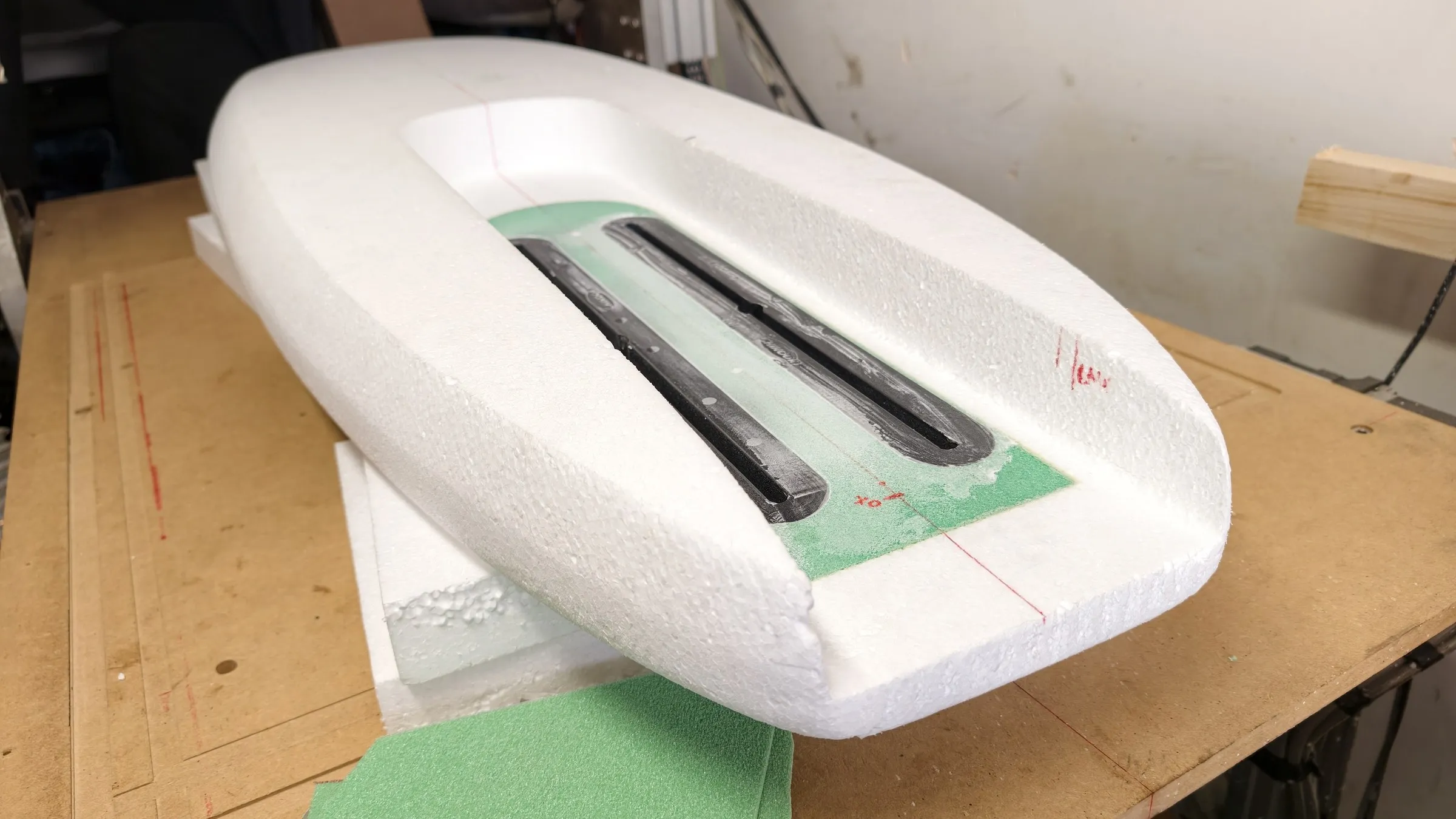
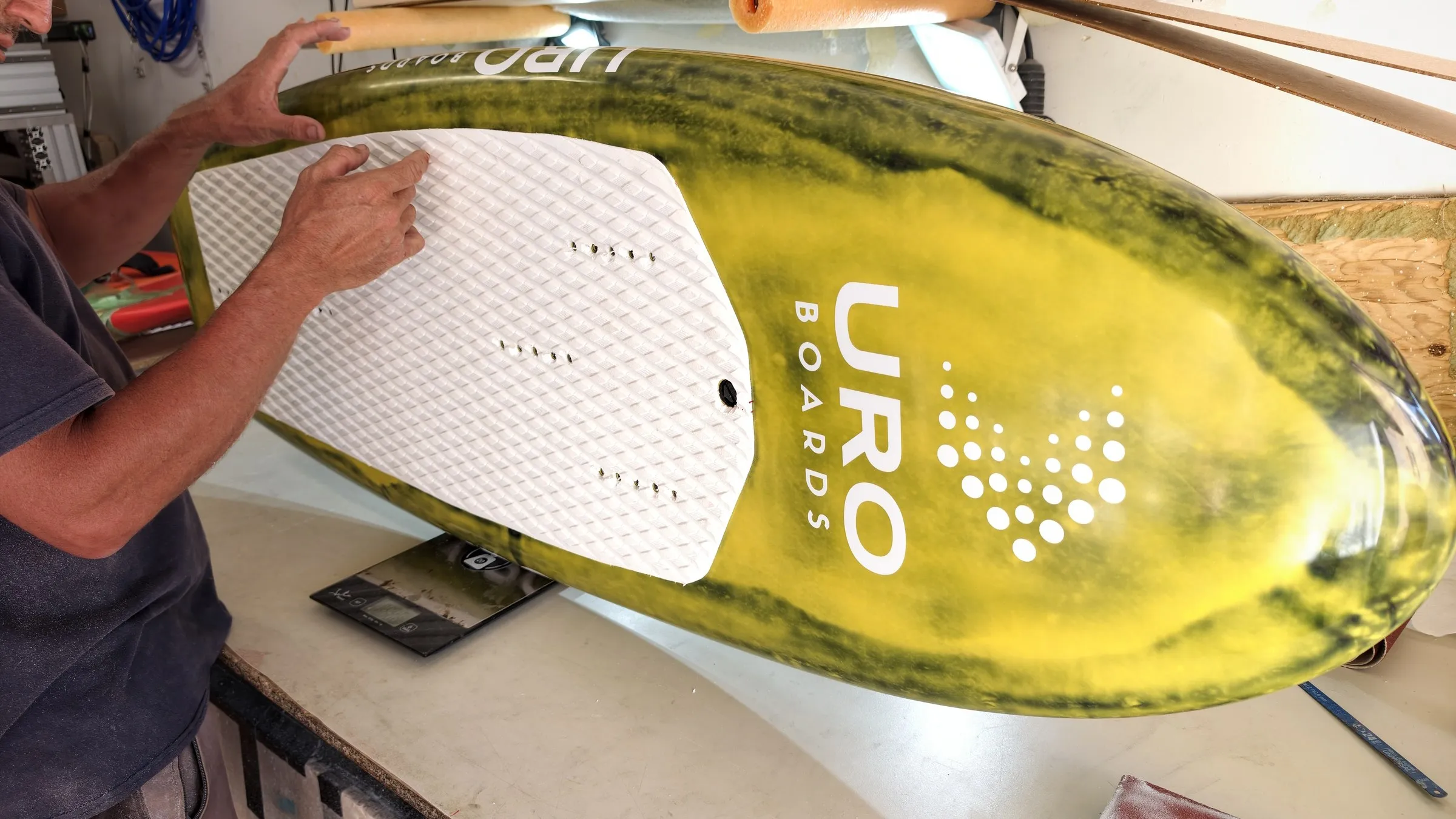
The areas that suffer most (foot zones, foil boxes) get the VIP treatment: high-density PVC and carbon reinforcements to strengthen them, transfer energy without losses and survive the most extreme jumps.
03. Carbon laminate
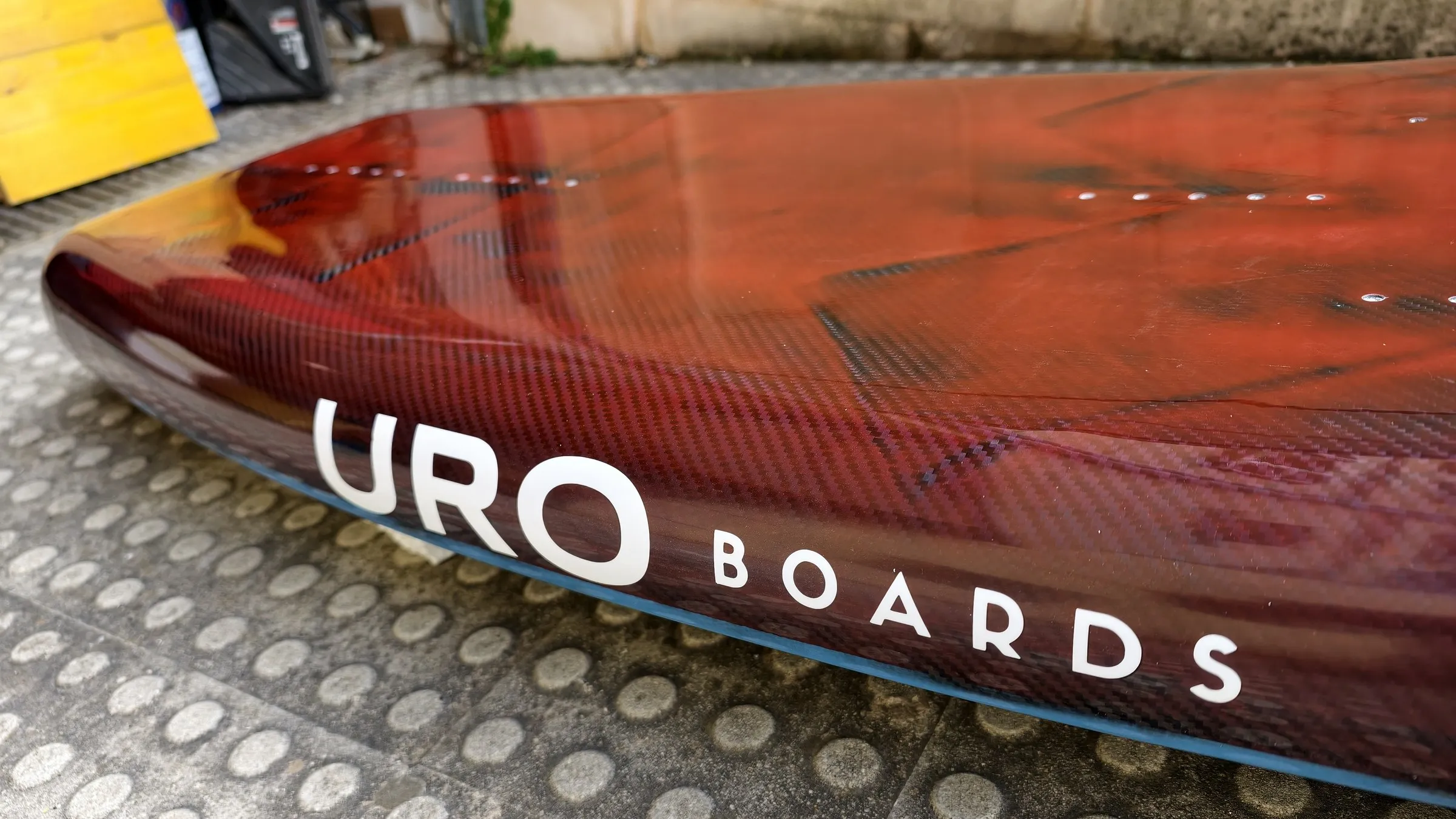
We use high-quality biaxial carbon, Textreme® carbon and selected technical fibres, for instant response, minimal deformation and maximum durability. This combination of materials gives the best balance between torsional stiffness and structural lightness.
04. Finish
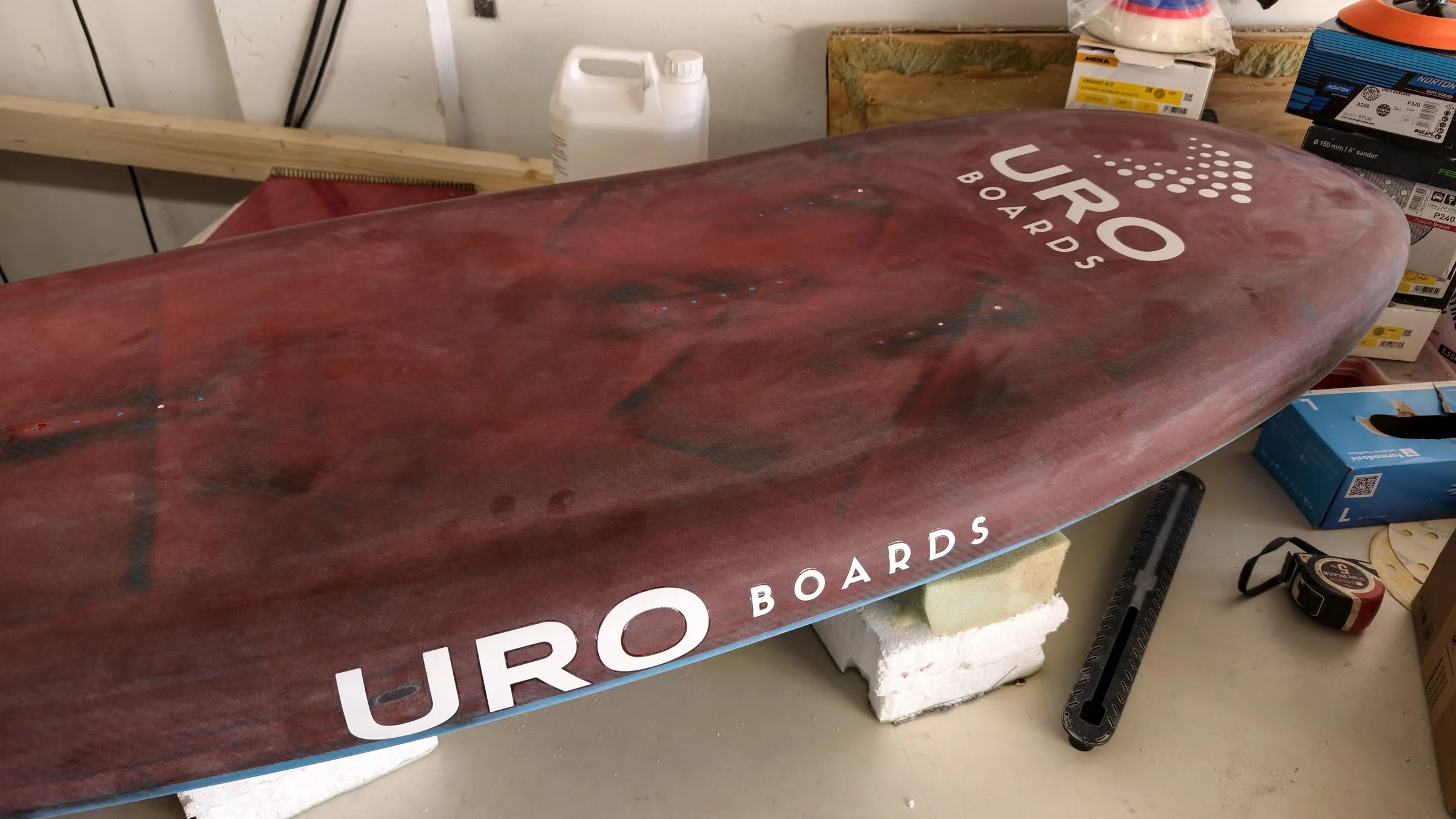
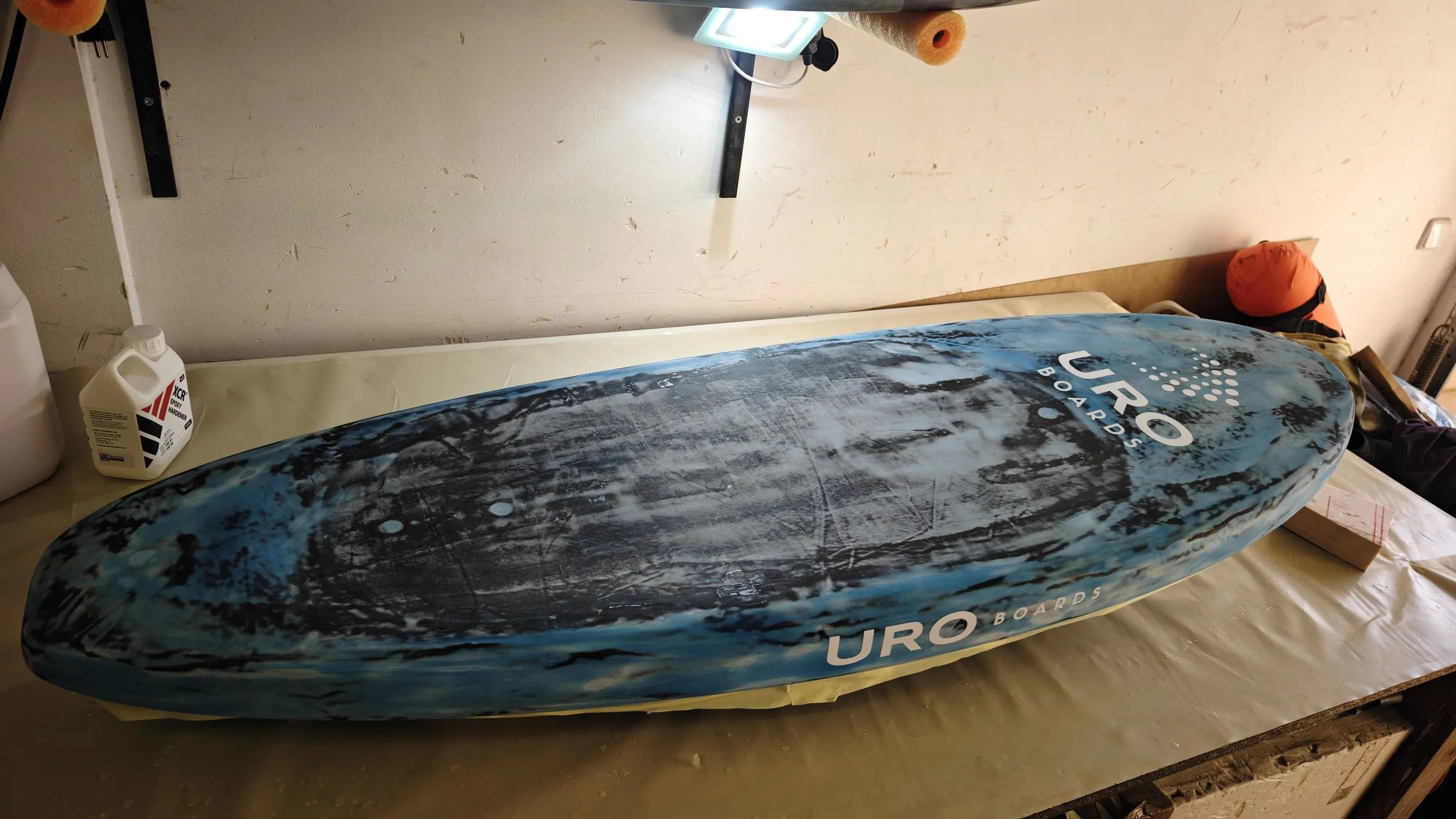
Instead of surface paint, we use a special epoxy resin with UV filter and pigment mixed right through it. It works like an outer shell. It doesn’t just cut the overall weight: it also stands up better to sun ageing, so the board lasts longer without compromising its looks.
Made to last. Built to perform. Fitted to you.
The build is full carbon fibre, with reinforcement exactly where it’s needed: foil boxes, rails, footstraps, tail. Not on a whim, but because we know waves don’t give warnings. And carbon doesn’t forgive.
A well-made board doesn’t need looking after. It just needs riding. And for you not to cheat on it with another one.
The 3D design comes from our own software
Every URO is drawn in URO Board Designer: outline, rocker, sections and foil boxes. The dimensioned blueprint and the model the CNC cuts both come from that same file.
Discover Board Designer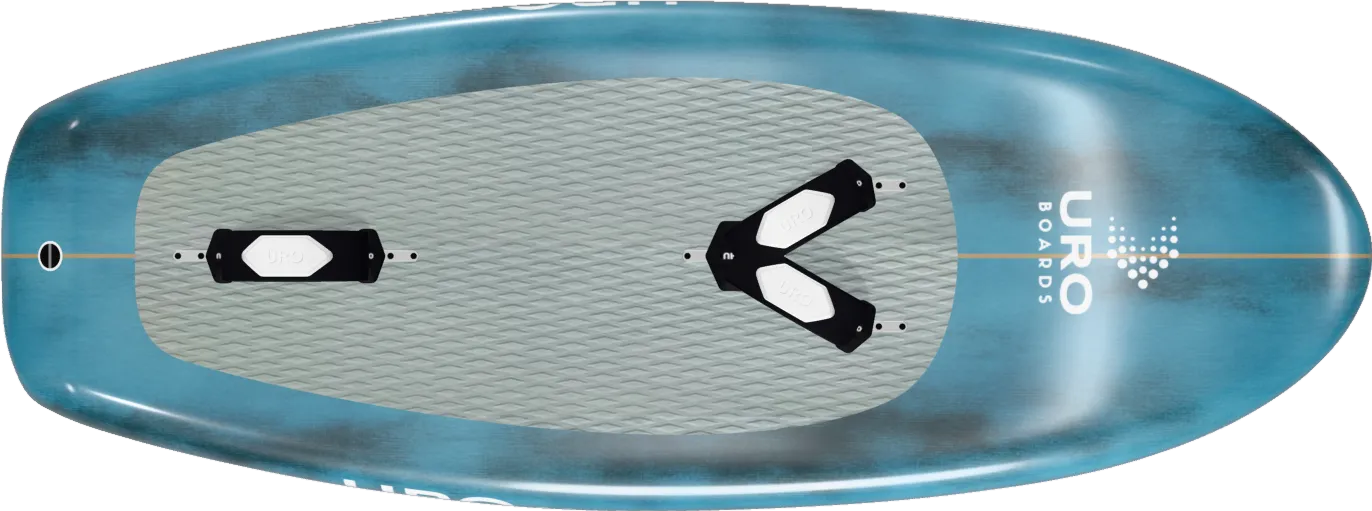

A well-made board doesn't ask you to baby it. It just asks you to ride it.
And not to cheat on it with another one.